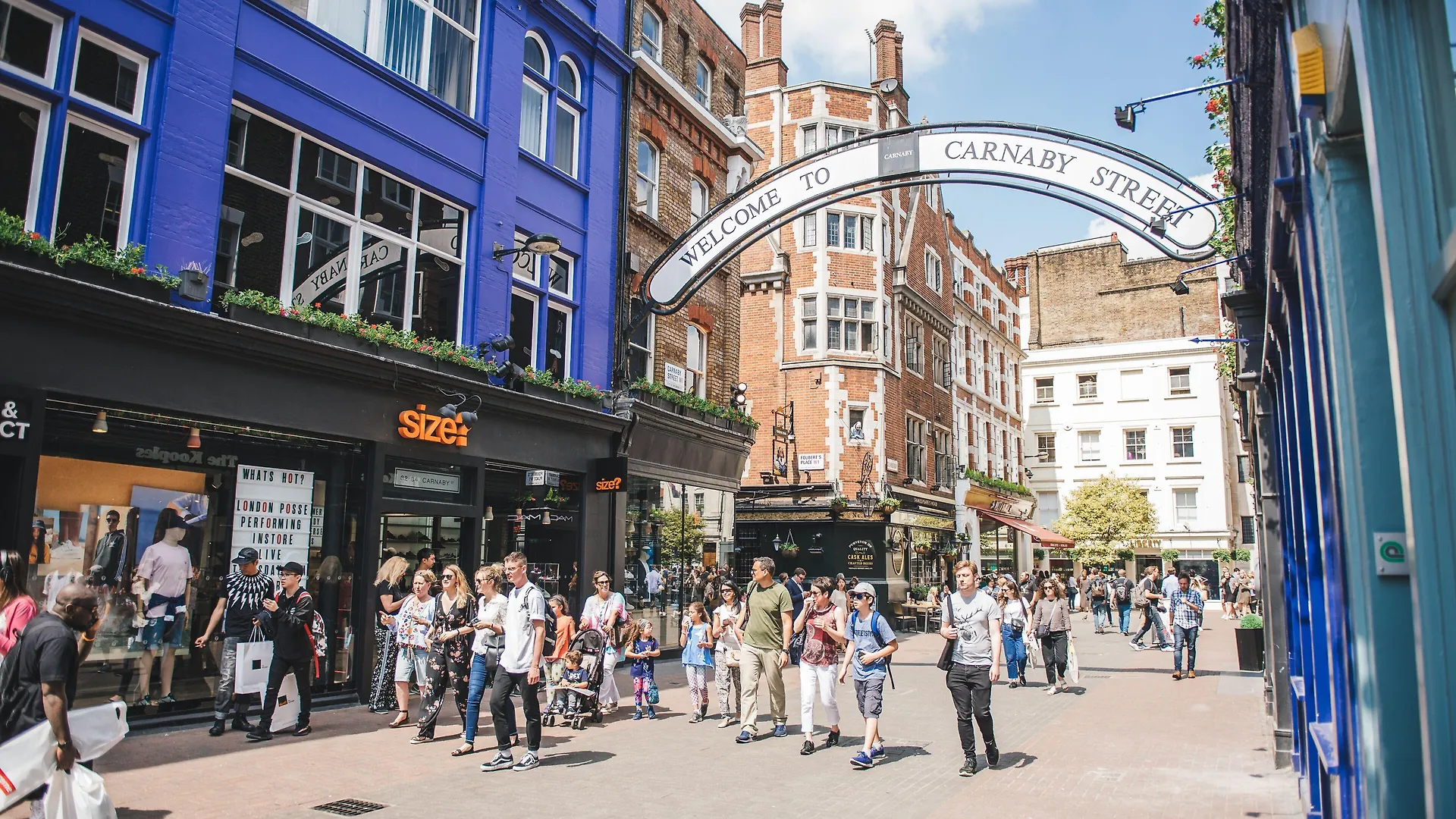
Theatreland is London's most concentrated entertainment zone, stretching across Shaftesbury Avenue, Covent Garden, and the streets connecting Piccadilly Circus to Holborn - with over 40 West End theatres within a walkable footprint. Staying centrally here means trading quiet residential streets for instant access to Leicester Square, the Royal Opera House, and the TKTS same-day ticket booth. These three central hotels sit at different points within that zone, each offering a distinct trade-off between location, room concept, and price.
What It's Like Staying In Theatreland
Theatreland occupies the dense urban corridor between Piccadilly Circus, Covent Garden, and the edge of Holborn - a zone where post-show foot traffic on Shaftesbury Avenue and Long Acre can remain heavy past midnight, particularly on weekends. Nearly every major West End theatre sits within a 15-minute walk from this cluster, which means pre-show dinners, late-night departures, and tube rides home are all genuinely walkable. During matinee days - typically Wednesdays and Saturdays - street congestion around Leicester Square and the Covent Garden piazza peaks between 14:00 and 16:00, then again after evening curtain at around 22:30. Travellers arriving without soundproofed rooms will notice the difference between a hotel on a side street off Drury Lane versus one facing Shaftesbury Avenue directly.
Pros:
- * Walking distance from over 40 West End theatres, Leicester Square tube, Covent Garden piazza, and the TKTS discount booth
- * Multiple tube lines (Piccadilly, Central, Northern) accessible within 10 minutes on foot, reducing reliance on taxis post-show
- * Concentration of pre- and post-theatre restaurants and bars means no need to plan far in advance for dining
Cons:
- * Street noise on and around Shaftesbury Avenue and Leicester Square continues late into the night, especially Thursday to Sunday
- * Tourist density around Covent Garden and Piccadilly Circus inflates restaurant prices and creates pavement congestion at peak hours
- * Limited green space or quiet streets within the immediate zone - the nearest calm is St James's Park, around 20 minutes' walk away
Why Choose Central Hotels In Theatreland
Central hotels in Theatreland don't compete on luxury - they compete on proximity and value-per-location. Compared to hotels in Marylebone or Bloomsbury with similar rack rates, a central Theatreland property saves around 20 minutes in transit time each way to the theatre district, which adds up across a multi-night stay involving multiple shows. Room sizes in this zone tend to run compact, with double rooms often under 16 square metres - a common trade-off for the address, and one that distinguishes these properties from larger-footprint hotels further east in Holborn or south near Waterloo. Properties here are also increasingly designed with noise mitigation built in: soundproofed walls and windowless interior room concepts are now standard in newer builds, directly responding to the ambient noise reality of the area. The nightly rate premium over Zone 2 hotels averages around 30%, but eliminates both transport costs and the logistical stress of catching last trains after late-finishing shows.
Pros:
- * No transport needed to reach most West End theatres - post-show, guests walk directly back to the hotel
- * Newer central hotels in Theatreland increasingly offer soundproofed or windowless rooms specifically engineered for urban sleep quality
- * Central positioning doubles as a base for Soho, Covent Garden, the British Museum, and the National Gallery without additional travel
Cons:
- * Compact room sizes are the norm - guests expecting large standard doubles will find the space trade-off significant compared to outer-zone hotels
- * Rates spike sharply during major West End openings, school holidays, and the Christmas season (November-December)
- * On-site amenities like restaurants or spas are minimal in most mid-range central options; guests rely on the surrounding neighbourhood
Practical Booking & Area Strategy
The strongest micro-locations within Theatreland for central hotels are the streets running between Aldwych and Drury Lane (close to the Lyceum and Theatre Royal), the blocks immediately west of Covent Garden piazza, and the Holborn fringe along High Holborn - all quieter at night than the Shaftesbury Avenue or Leicester Square frontages while remaining within 10 minutes' walk of the main theatre cluster. Piccadilly Circus and Leicester Square stations are the most direct tube access points, with Holborn station (Central line) serving the eastern edge of the district. For West End show weeks - particularly during the Christmas production season from late November - hotel rates in Theatreland can increase by around 40% over standard midweek pricing, making 6-week advance booking the practical threshold for securing competitive rates. Things to do beyond shows include the free National Gallery on Trafalgar Square (10 minutes on foot), the British Museum near Holborn (15 minutes on foot), the Covent Garden market stalls and street performances daily, and the Somerset House courtyard. Night-time atmosphere in Theatreland is busy and well-lit, with active streets and consistent footfall until well past midnight around Covent Garden, making it one of London's safer-feeling late-night central zones.
Best Value Stays
These two hotels deliver strong Theatreland positioning at more accessible price points, with room concepts designed specifically around the urban noise and space constraints of the district.
-
1. Zedwell Hotel Piccadilly Circus
Show on map


 Check-infrom 15:00 until 23:30Check-outfrom 02:00 until 10:00
Just a few rooms left at the best rate!
from£ 94
-
2. The Z Hotel Holborn
Show on map


 Check-infrom 15:00 until 23:59Check-outuntil 11:00
Hurry – almost gone at this price!
from£ 68
Best Premium Stay
For guests prioritising in-room self-catering, more generous room layouts, and a Covent Garden address, this property offers a meaningfully different proposition from the compact urban hotel format.
-
3. The Resident Covent Garden
Show on map


 Check-infrom 15:00 until 23:59Check-outuntil 11:00
Rooms filling fast – secure the best rate!
from£ 266
Smart Travel & Timing Advice
Theatreland operates on a year-round calendar, but two periods drive the sharpest price and availability pressures: the Christmas season (mid-November through early January), when major productions run extended schedules and tourist volume from across the UK peaks, and school half-terms - particularly the October break - when family-oriented musicals fill quickly. Booking at least 6 weeks ahead during these windows is the effective threshold for securing standard double rooms at reasonable rates across all three of the hotels in this guide. Outside these peaks, late spring (April-May) and early autumn (September) offer the best combination of active show schedules, moderate pricing, and manageable crowd levels on the streets around Covent Garden and Shaftesbury Avenue. A 2-night minimum stay is the practical floor for a Theatreland trip built around shows - one night rarely justifies the central premium - while 3 to 4 nights allows for two shows, daytime sightseeing, and a more relaxed pace. Midweek arrivals (Tuesday-Thursday) consistently undercut weekend rates and coincide with matinee availability, making Wednesday in particular the most cost-efficient single day to base a theatre visit around.